Uganda’s Wildlife Rebounds Amid Growing Threats, New Report Reveals
 Frank Semata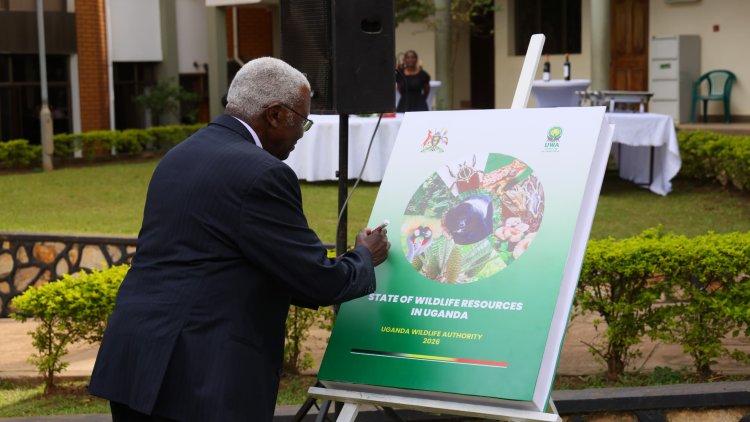
Uganda’s wildlife sector is showing strong signs of recovery, with several key species recording population increases over the past decade, according to the newly released State of Wildlife Resources in Uganda Report 2026.
The report presents a cautiously optimistic picture—highlighting conservation gains driven by improved protection and technology, while warning of mounting pressures from habitat loss, climate change and human activity.
Wildlife remains one of Uganda’s most valuable national assets, underpinning tourism, rural livelihoods, ecosystem stability and cultural identity.
From water regulation to climate resilience, the country’s biodiversity continues to play a critical role in both environmental sustainability and economic growth.
The report shows that populations of several iconic species have either stabilized or increased.
Buffalo numbers have risen from 32,235 to 41,548, while zebras have grown from 17,762 to 20,942. Chimpanzees have increased from 5,072 to 6,075, reinforcing Uganda’s position as a global stronghold for great ape conservation.
Meanwhile, Uganda kob, waterbucks, elands and Nubian giraffes have all recorded steady gains
One of the most remarkable success stories is the recovery of the southern white rhinoceros. Once extinct in Uganda, rhino numbers have grown from 43 to 61 through dedicated breeding programmes, habitat management and heightened security efforts.
This steady comeback signals the effectiveness of long-term species restoration strategies.
Experts attribute these gains to strengthened law enforcement, improved ranger capacity and the adoption of advanced conservation technologies.
Tools such as SMART ranger patrol systems, EarthRanger tracking, aerial wildlife surveys, camera traps and digital ecological databases have significantly enhanced monitoring, enabling faster response to threats and more informed decision-making.
Efforts to reduce human-wildlife conflict are also beginning to show results.
Interventions such as electric fencing, trenches, beehive barriers, rapid response teams and the deployment of community wildlife scouts have helped lower conflict incidents in several high-risk areas.
These measures are critical in protecting both wildlife and communities living near conservation areas.

However, the report makes it clear that these gains remain fragile.
Uganda’s wildlife is under increasing pressure from rapid population growth, expanding agriculture, infrastructure development and extractive industries.
Habitat loss and fragmentation are shrinking the space available for wildlife and disrupting ecological corridors essential for species movement and survival.
Climate change is further intensifying these challenges. Changing rainfall patterns, prolonged droughts, floods, wildfires and shifting ecosystems are affecting species distribution, reproduction and long-term survival.
In many protected areas, invasive plant species are degrading habitats, reducing food availability and complicating conservation efforts.
Illegal wildlife activities also persist. While large-scale commercial poaching has declined compared to previous decades, small-scale subsistence poaching, illegal fishing and resource extraction continue to exert pressure—particularly in areas bordering protected zones.
Human-wildlife conflict remains a major concern, affecting livelihoods, food security and community attitudes toward conservation.
The report also highlights significant gaps in research and monitoring. While data on large mammals in savannah ecosystems is relatively robust, many species including plants, fungi, invertebrates, amphibians, reptiles, and small mammals remain understudied, despite some being endemic and threatened.
Monitoring outside protected areas is still limited, even though these landscapes are vital for wildlife connectivity.
In addition, fragmented data systems, limited technical capacity in advanced ecological analysis and insufficient funding continue to hinder effective conservation planning and long-term tracking of wildlife trends.
Importantly, the report emphasizes that wildlife conservation is not just about animals. Uganda’s flora—including indigenous plants, cycads, medicinal species and crop wild relatives—plays a crucial role in food security, climate adaptation and ecosystem restoration. Protecting habitats, experts say, is fundamental to sustaining both biodiversity and human well-being.
The report calls for a shift toward “nature-positive” development—integrating conservation into national planning and investment decisions.
Key recommendations include strengthening institutional capacity, increasing conservation funding, expanding technology-driven monitoring, restoring degraded ecosystems, and promoting community participation and benefit-sharing.
It also advocates for the inclusion of wildlife health within a One Health framework, recognizing the interconnectedness of human, animal, and environmental health