African NGOs Unite to Oppose Proposed Battery Cage Standards
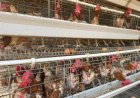
Battery cages confine hens in small metal enclosures, typically providing each bird with less space than an A4 sheet of paper. In these conditions, hens are unable to express basic natural behaviours such as wing-flapping, nesting, perching, or dust-bathing.
 Nabaasa Innocent
 A broad coalition of more than 30 African animal welfare and civil society organisations has strongly condemned proposed continental standards that would formalise the use of battery cages for egg-laying hens across Africa.
The proposal, developed by the African Organisation for Standardisation (ARSO) and released in late 2025, has drawn sharp criticism for endorsing battery cages as “essential” for poultry production and for claiming that they “guarantee the welfare of birds.” Animal welfare experts and advocates argue that these claims contradict decades of established scientific research.
The coalition—led by Compassion in World Farming Southern Africa (CIWF) and Animal Law Reform South Africa (ALRSA)—includes organisations from 22 African countries, among them Uganda, Somalia, Ghana, Tanzania, and South Africa. Together, the groups have submitted a joint letter to ARSO and the national standards bodies of its 44 member states, urging the rejection of battery cages as an African farming standard.
Cruelty and Scientific Contradictions
Battery cages confine hens in small metal enclosures, typically providing each bird with less space than an A4 sheet of paper. In these conditions, hens are unable to express basic natural behaviours such as wing-flapping, nesting, perching, or dust-bathing.
Animal welfare organisations warn that such systems are associated with severe physical and psychological harm, including osteoporosis, bone fractures, foot lesions, muscle atrophy, chronic stress, and restricted access to fresh air and natural light.
Critics argue that the ARSO proposal ignores this evidence and risks institutionalising cruelty across the continent.
Economic and Trade Risks for African Farmers
Beyond animal welfare concerns, the coalition highlights serious economic risks associated with adopting battery cage systems. Globally, consumer demand is rapidly shifting toward higher-welfare, cage-free egg production. Battery cages were banned in the European Union in 2012 on welfare grounds, and many multinational food companies have committed to removing caged eggs from their supply chains.
Advocates warn that endorsing battery cages could undermine Africa’s competitiveness in international markets and risk turning the continent into a “dumping ground” for second-hand cage equipment from countries that have already phased out these systems.
Concerns Over Transparency and Public Participation
The joint letter also raises concerns about the standards-setting process itself, citing a lack of transparency and insufficient public consultation. The coalition argues that decisions affecting food systems, farmers, consumers, and animals should involve meaningful participation from civil society and the public.
Additional concerns outlined in the letter include long-term food system sustainability, consumer rights, and the need for clear labelling of eggs produced in caged systems.
Calls Ahead of ARSO Meeting
Ahead of ARSO’s planned standards meeting on 4 February 2026, the coalition has issued clear demands. These include rejecting battery cages as an African standard, removing inaccurate welfare claims from the draft, promoting cage-free and higher-welfare systems, preventing the importation of outdated cage equipment, and ensuring proper public consultation before any further steps are taken.
Voices From Across Africa
Amy P. Wilson, Executive Director of Animal Law Reform South Africa, described battery cages as “a relic of Western and colonial industrial agriculture, designed for extraction and profit rather than care or community,” adding that Africa has the opportunity to choose a different, more ethical path.
Alexis Olds, Head of Southern Africa for Compassion in World Farming, emphasised that rejecting battery cages is essential for safeguarding animals and ensuring African agriculture remains future-ready and sustainable.
From East Africa, Ayubu Nnko of Education for Africa Animal Welfare (Tanzania) warned that formalising cage systems would legitimise practices that many Western countries are now abandoning after recognising their unacceptable welfare impacts.
Dr Shafii Abdullahi, CEO of the Somali Animal Welfare Society, noted that many Somali poultry farmers already favour cage-free systems, viewing battery cages as incompatible with ethical and sustainable farming.
Representing Uganda, Nabaasa Innocent, Executive Director of the Vegan and Animal Rights Society Uganda, stated that battery cages deny hens “space, dignity, and natural behaviours every living being deserves,” cautioning that Africa must not standardise cruelty.
Dr Emmanuel Nyamekye of the Animal Welfare League (Ghana) added that Africa should be setting higher standards, not endorsing systems the rest of the world is moving away from.
A Defining Moment for African Food Systems
As debates continue, animal welfare advocates say the ARSO proposal represents a defining moment for Africa’s agricultural future. They argue that embracing cage-free and higher-welfare systems would better reflect African values, protect animals, support farmers, and align the continent with global progress toward more humane and sustainable food production.