Hon. Esther Anyakun Calls for Safe, Dignified Labour Migration to Protect Ugandans Abroad
 Namugumya Angella
Hon. Esther Anyakun, the State Minister for Labour, Employment and Industrial Relations, has emphasized the urgent need to promote safe, legal, and dignified labour migration as more Ugandans seek employment and educational opportunities abroad.
In today’s increasingly globalized world, international migration has become a pathway to improved livelihoods, skills development, and economic growth. However, Hon. Anyakun cautioned that when migration is undertaken through unsafe or illegal channels, it exposes travelers to serious risks including exploitation, human trafficking, contract fraud, and unsafe working conditions.
“Migration can open doors to opportunity, but only when done through the right channels. Our responsibility as a country is to ensure that Ugandans who travel abroad for work are protected, informed, and supported every step of the way,” she said.
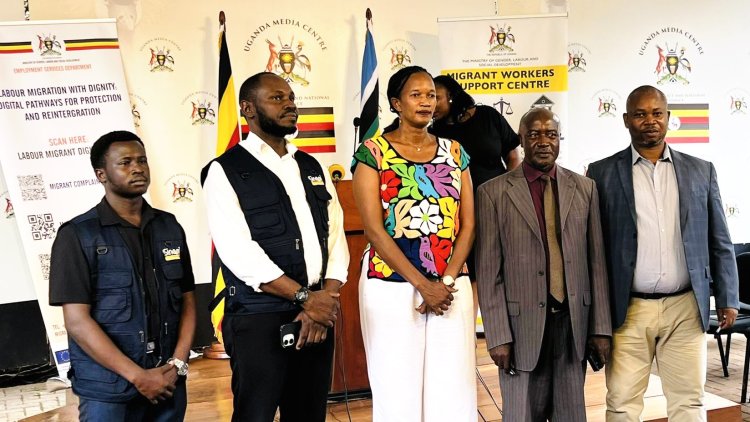
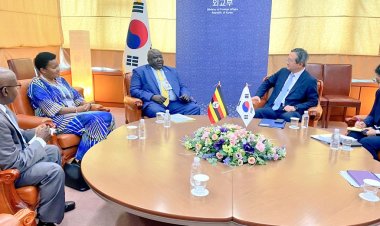
The Minister highlighted that government, through its embassies and foreign missions, is strengthening monitoring and protection systems for migrant workers abroad. These systems enable authorities to collect reliable data, offer support services, and respond swiftly when Ugandans face challenges in destination countries.
A key pillar of safe migration, according to Hon. Anyakun, is pre-departure preparation. Mandatory pre-departure training equips prospective migrant workers with critical information about their rights, job expectations, cultural differences, emergency contacts, and legal obligations.
“Pre-departure training empowers workers to make informed decisions and reduces vulnerability to exploitation. Knowledge is the first line of protection,” she noted.
Hon. Anyakun also warned Ugandans against using unlicensed recruitment agencies or informal tour and travel companies to seek employment abroad. She stressed that only licensed and authorized recruitment companies should be used, as unauthorized agents often expose job seekers to fraud, abuse, and trafficking.
In addition, the Minister underscored the importance of proper documentation, particularly the use of employment visas rather than tourist or visit visas when traveling for work. She explained that a legitimate employment contract must clearly outline job responsibilities, salary, working hours, and conditions of service to ensure transparency and accountability.
Support systems for migrant workers remain a priority. The Ministry, in collaboration with partners, is strengthening call centers, worker support centers, and communication platforms that allow migrants to report complaints, seek guidance, and access emergency assistance. These mechanisms also help maintain communication between workers and their families back home.
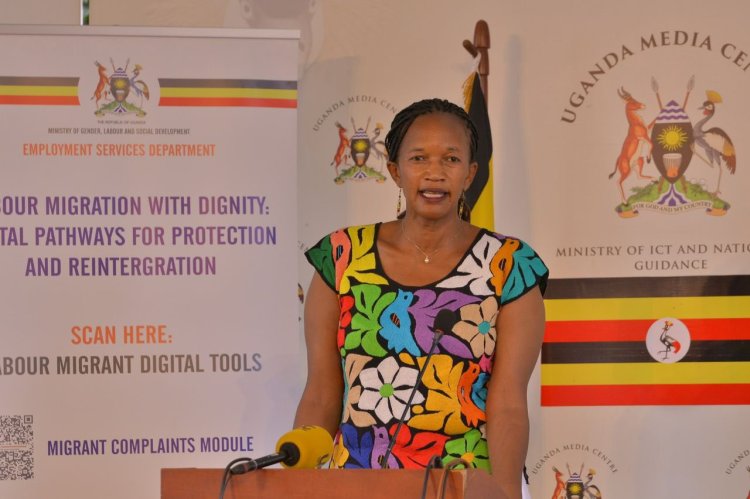
“Labour migration with dignity means that Ugandans are respected, protected, and treated fairly wherever they go. It is not just about procedures—it is about human dignity,” Hon. Anyakun emphasized.
She further noted that the adoption of digital systems and pathways will enhance worker protection, improve welfare tracking, and support reintegration of returning migrant workers into the national economy.
Hon. Anyakun called on all stakeholders—including government agencies, recruitment companies, community leaders, and travelers themselves—to support public awareness initiatives such as “Travel Safe, Stay Safe.” These campaigns, she said, reinforce the message that safety begins with preparation, legality, and informed decision-making.
“By working together, we can ensure that migration becomes a tool for opportunity, growth, and security—not risk and exploitation,” she concluded.